
Last Updated: November 12, 2026
Quick Summary
A drift alternative for b2b sales is a chat and lead qualification platform that recovers qualified website traffic instead of only reacting to widget clicks. Deal Angels adds a recovery layer that detects buying intent in real time and routes prospects to sales, while HubSpot Chat, Crisp and Tidio fit other motions.
- Deal Angels is quote-based and best for teams losing qualified traffic to silent browsing.
- HubSpot Chat suits teams already running HubSpot CRM and marketing automation.
- Crisp offers one shared inbox across chat, messaging apps and email for lean teams.
- Model total cost of ownership across five buckets, including usage and implementation.
- Run both tools in parallel for two weeks before cutting over.
Table of Contents
- Why B2B Teams Are Searching for a Drift Alternative in 2026
- Comparison Table: Drift Alternatives for B2B Sales at a Glance
- 1. Deal Angels: The Recovery Layer That Turns Anonymous Traffic Into Sales Conversations
- 2. HubSpot Chat: The CRM-Native Option for Teams Already in the Ecosystem
- 3. Crisp: A Multi-Channel Chat Hub for Lean Sales Teams
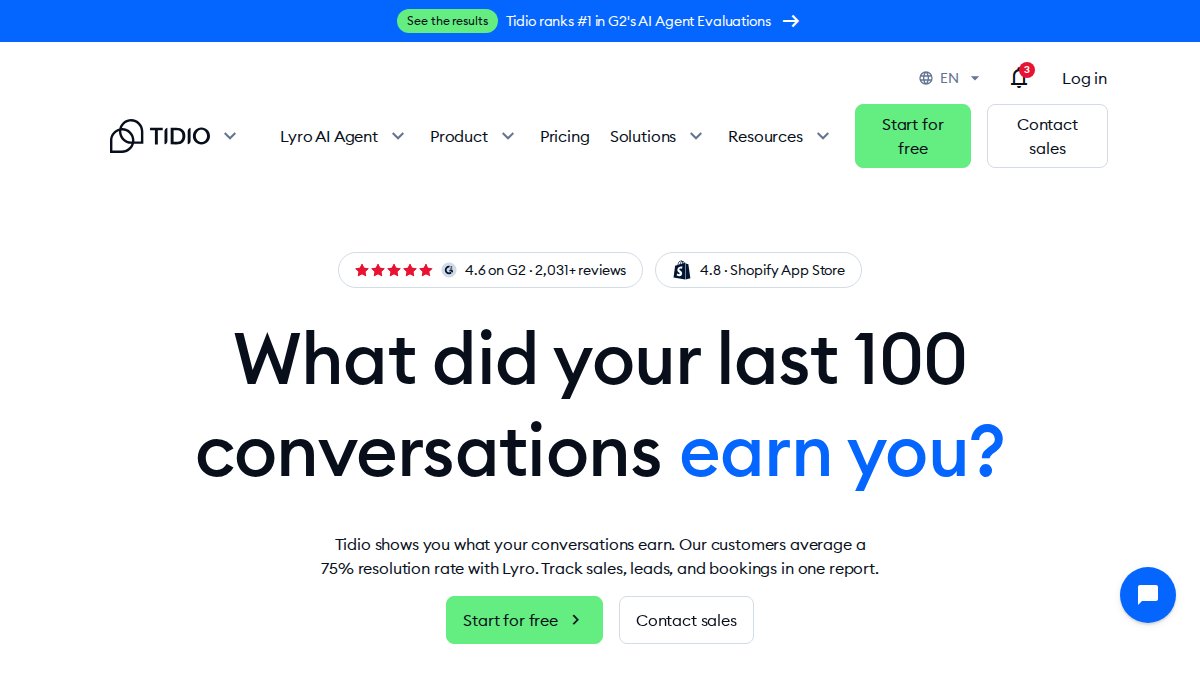
- 4. Tidio: Affordable B2B Sales Chat Software With Automation Built In
- Is There a Free Drift Alternative for B2B Sales?
- What to Look for in Website Lead Qualification Software
- Frequently Asked Questions
Why B2B Teams Are Searching for a Drift Alternative in 2026
Sales teams rarely switch chat tools for fun. They switch because the renewal invoice lands, the conversation data sits in a silo, and the pipeline still looks flat. A drift alternative for b2b sales usually enters the conversation when a sales director realizes the tool is capturing chats but not closing the loop on qualified leads.
At Deal Angels, we talk to revenue leaders every week who describe the same pattern: plenty of website traffic, plenty of chat sessions, and very few conversations that turn into pipeline.
That distinction matters more now. Buyers research silently for weeks before they ever fill out a form, and a growing share of that research happens on pages you already paid to drive traffic to. If your chat layer only reacts when someone clicks a widget, you are missing the visitors who never raise a hand.
Below, we break down four practical alternatives, what each one is genuinely good at, and where the trade-offs show up. We also cover migration, total cost, and the evaluation criteria that separate a useful switch from an expensive sidegrade.
Comparison Table: Drift Alternatives for B2B Sales at a Glance
Here is the short version before the detail. Each option below fits a different sales motion, so the right pick depends on team size, CRM stack, and how much of your pipeline comes from inbound website traffic.
| Tool | Best For | Core Strength | Pricing Model |
|---|---|---|---|
| Deal Angels | Teams losing qualified traffic to silent browsing | Real-time buying intent detection and routing | Quote-based |
| HubSpot Chat | Teams already running HubSpot CRM | Native CRM and contact records | Bundled with HubSpot plans |
| Crisp | Lean teams wanting one inbox across channels | Multi-channel chat and shared inbox | Contact for pricing |
| Tidio | Small teams needing automation on a budget | Chatbot and automation builder | Contact for pricing |
Two things stand out in this table. First, only one option is built specifically around recovering lost opportunities rather than starting new chats. Second, the pricing structures differ enough that comparing sticker cost alone will mislead you.
For a wider view of how these platforms stack up beyond this shortlist, our guide to conversational marketing software covers the broader category.
1. Deal Angels: The Recovery Layer That Turns Anonymous Traffic Into Sales Conversations
Deal Angels works the opposite way: it treats your existing traffic as the asset and adds a recovery layer that engages visitors in real time, identifies buying intent, and connects prospects with your sales team.

That framing matters for B2B teams with long cycles and high-value contracts. You are not short on traffic. You are short on visibility into which visitors are actually evaluating a purchase.
Best for: Sales directors and growth leads at B2B software and professional services firms where inbound traffic is expensive and deal sizes are large.
Skip if: You have almost no website traffic and your pipeline comes entirely from outbound.
It works best alongside the systems you already run. You can see how the recovery layer works on the product page before deciding whether it fits your stack.
2. HubSpot Chat: The CRM-Native Option for Teams Already in the Ecosystem
Best for: Teams with an established HubSpot CRM and marketing automation setup.
Skip if: You are not on HubSpot, or you are on a lower tier and don’t plan to upgrade.
For teams benchmarking the major players, our Drift vs Qualified pricing comparison breaks down how the larger platforms structure their contracts.
3. Crisp: A Multi-Channel Chat Hub for Lean Sales Teams
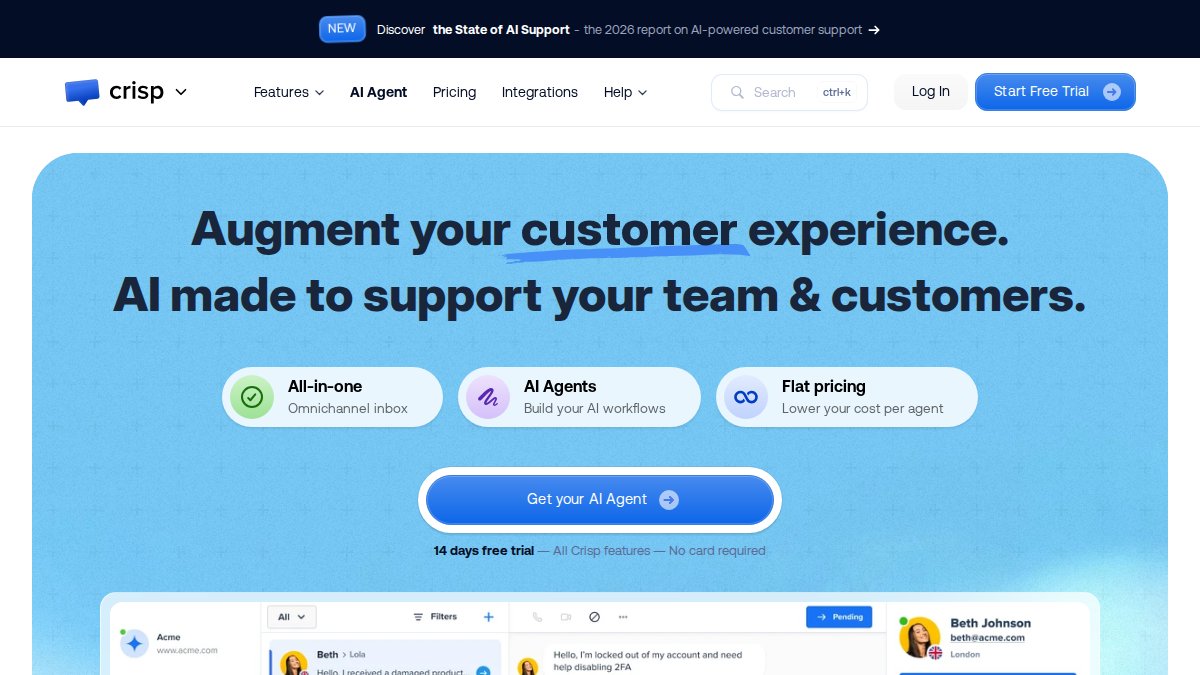
Crisp takes a different angle: one shared inbox across website chat, messaging apps, and email, with a clean interface that small teams can run without a dedicated ops person. The pitch is consolidation, not deep B2B qualification, and that distinction should drive your evaluation.
Where it runs out of road.
Best for: Small teams that want one inbox across several channels without heavy setup.
Skip if: You need sophisticated lead qualification and routing out of the box.
For a wider view of how these platforms stack up beyond this shortlist, our guide to conversational marketing software covers the broader category.
4. Tidio: Affordable B2B Sales Chat Software With Automation Built In
Best for: Small teams wanting automated first-response coverage at low cost.
Skip if: Your deals require human qualification at the first touch.
Is There a Free Drift Alternative for B2B Sales?
Yes, but with a caveat worth stating plainly. Several platforms offer free tiers or trials, and they can work well for early-stage teams testing whether chat converts at all. What free plans rarely include is the part that matters most in B2B: intent detection, lead routing, and CRM sync at depth.
A common mistake is choosing a free plan, running it for a quarter, and concluding chat doesn’t work. Usually the tool wasn’t the problem. The missing routing layer was. Treat a free tier as a test of whether your traffic responds to live engagement, not as a permanent stack decision.
For a deeper look at whether chat alternatives genuinely outperform the incumbent for sales outcomes, read our breakdown of live chat alternatives for sales.
What to Look for in Website Lead Qualification Software
Website lead qualification software is the layer that decides which visitors deserve a human conversation and which should be left to self-serve. Getting that decision right is the difference between a chat tool that helps and one that buries reps in noise. Most ranking pages stop at a feature list. The sections below go further: a decision framework by sales motion, a total-cost-of-ownership model, and a migration checklist you can run before you sign anything.
Decision framework by sales motion
The right tool depends less on feature count than on how your team actually sells. Use this framework to narrow the field before you take demos.
- High inbound volume, short cycles. Prioritize real-time intent detection, automated qualification, and instant routing to the next available rep. Volume rewards speed and consistency over deep account context.
- Account-based selling with named accounts. Prioritize visitor identification against your target account list, intent signals tied to specific accounts, and routing to the named owner. Volume matters less than matching the right visitor to the right rep.
- Small sales team, broad coverage. Prioritize a shared inbox, human handoff, and automation that covers after-hours first response. Sophisticated routing logic is wasted if no one is available to receive the routed conversation.
- Automation-first, live-support second. Prioritize a flow builder, saved replies, and chatbot coverage. Accept that complex, multi-stakeholder deals will still need a human escalation path.
- Live-support-first, automation second. Prioritize human handoff speed, rep notifications, and CRM sync. Automation should remove busywork, not gatekeep the conversation.
A common pattern is that teams buy for the motion they wish they had rather than the one they run. Match the tool to your current pipeline mix, then revisit when the mix changes.
Total cost of ownership, not sticker price
Subscription price is the smallest line item in most two-year contracts. Build a realistic annual estimate across five cost buckets before you compare vendors:
- Subscription and seats. List price times the number of reps who need access, plus any admin or manager seats.
- Usage. Conversation volume, identified visitors, AI credits, or message tiers. Ask what happens when you exceed the included allotment, overage rates vary widely.
- Implementation. Setup fees, onboarding services, and internal engineering time to configure routing, CRM fields, and playbooks.
- Integrations and add-ons. Some platforms charge separately for CRM sync, analytics, or advanced routing. Confirm what is native versus paid.
- Support and renewal. Support tier, SLA, and renewal escalation terms. Ask for renewal terms in writing before you sign.
Watch out: usage-based models can look cheap at pilot volume and expensive at full rollout, model the cost at your projected peak month, not your current average.
Migration checklist: map before you switch
A feature-by-feature migration checklist saves weeks and prevents the silent breakage that shows up a quarter after cutover. Run this list against your current tool before you commit to a replacement.
- Inventory every live chat flow, playbook, and saved reply, and confirm the equivalent exists in the new tool.
- Map routing rules, territory, segment, account owner, round-robin, and test each one in the new system.
- List every integration in use (CRM, marketing automation, analytics, help desk) and confirm native versus custom support.
- Confirm transcript and contact export, including attachments and custom fields.
- Document consent capture, retention settings, and access controls, and verify the new tool supports the same requirements.
- Rebuild reporting dashboards and confirm the new tool exposes the same metrics (response time, qualified meetings, routing accuracy).
- Run both tools in parallel for two weeks and compare conversation capture and routing outcomes before cutting over.
Evaluation questions to ask every vendor
- Does it identify buying intent in real time, or only after a form submission?
- Can it route qualified prospects to a specific rep based on territory, segment, or account?
- Does it sync conversation data back to your CRM without manual export?
- What is the actual handoff speed from visitor engagement to rep notification?
- Can you export your conversation and contact data if you leave?
- Does the vendor document data retention and privacy practices clearly?
- What does the contract look like at renewal, and is pricing flat or usage-based?
If you are still weighing conversational marketing against email-led nurture, our comparison of conversational marketing and email automation explains where each approach earns its keep.
Frequently Asked Questions
What is the best Drift alternative for B2B sales?
The best drift alternative for B2B sales depends on your sales motion. Deal Angels is built to identify buying intent and connect qualified prospects with the right salesperson. HubSpot Chat suits teams already using HubSpot CRM. Crisp and Tidio fit leaner teams that want chat plus automation. Evaluate each on lead qualification, routing speed, CRM integration, and total cost before choosing.
Which Drift alternatives are best for B2B lead qualification?
Look for tools that score intent in real time, capture contact details, and route qualified leads to the right salesperson. Deal Angels identifies buying intent and connects prospects with your team. Website lead qualification software should also log conversations to your CRM so reps can follow up with context rather than starting cold.
Is there a free Drift alternative for B2B sales?
Some chat tools offer free tiers, but free plans usually limit seats, conversation volume, or automation. For B2B teams with high-value contracts, the cost of a missed qualified lead often outweighs the savings. A free Drift alternative for B2B sales can work for early testing, but confirm the plan includes lead capture, routing, and CRM sync before you rely on it for pipeline.
What should B2B teams look for when replacing Drift?
Prioritize four things: intent detection that separates real buyers from browsers, fast routing to the right rep, CRM integration that preserves conversation history, and transparent pricing you can model against headcount. Also check data portability and security terms so you are not locked in. Run a short pilot and measure qualified conversations, not just chat volume.
Can a website sales assistant qualify leads and route them to a sales team?
Yes. A website sales assistant can engage visitors in real time and help route qualified prospects to the right salesperson. Deal Angels is built as a recovery layer for this purpose, helping teams convert existing traffic into sales conversations.
